The Law Against Ukay-ukay: Clarified
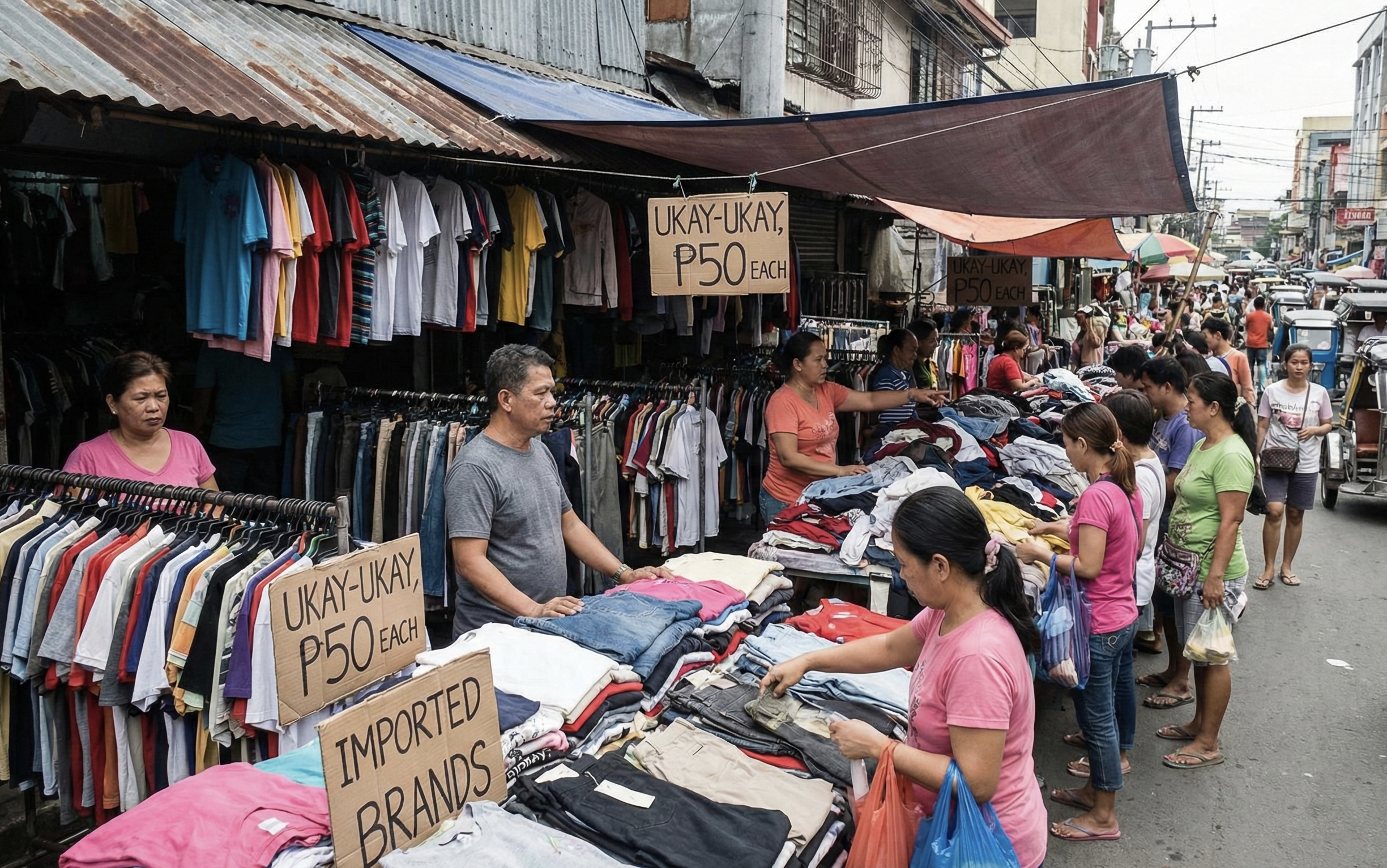
Walk down any busy street in the Philippines—from the humid alleys of Divisoria to the air-conditioned malls of Makati—and you will likely spot an ukay-ukay outlet. These stores, selling second-hand imported clothing, are a staple of Filipino commerce.
Yet, if you ask a lawyer or a customs officer, they will tell you that ukay-ukay is illegal.
This creates a confusing paradox for the average Filipino: If it’s illegal, why is it everywhere? The answer lies in a specific legal technicality found in Republic Act No. 4653.
The law in question is Republic Act No. 4653, enacted in 1966. Its title is formidable: "An Act to Safeguard the Health of the People and Maintain the Dignity of the Nation by Declaring it a National Policy to Prohibit the Commercial Importation of Textile Articles Commonly Known as Used Clothing and Rags."
The key phrase here is "Commercial Importation."
Section 1 of the law explicitly makes it unlawful "to introduce into any point in the Philippines" used clothing for commercial purposes. The penalty is severe: fines and imprisonment of up to five years. However, this penalty applies to the importer—the entity that brought the shipping container through the Bureau of Customs.
Here is where the law loses its teeth: R.A. 4653 does not explicitly penalize the domestic sale of the goods once they have successfully entered the country.
This gap is protected by the Latin legal maxim: Nullum crimen, nulla poena sine lege ("There is no crime when there is no law punishing it").
Jurisprudence, such as Bureau of Customs vs. Interlink Recyclers, affirms that the crime punished by R.A. 4653 is the act of importation—the introduction of goods into Philippine territory. Because penal laws are construed strictly, the absence of a specific provision in R.A. 4653 penalizing the 'sale' or 'possession' effectively immunizes third-party retailers from liability under this specific statute.
While the act of bringing the clothes into the Philippines is a crime, the act of selling them on a rack in Quezon City or Davao is not covered by the specific penalties of R.A. 4653. The law was written to stop the flow of goods at the border, not to police the retail counter.
This creates a massive enforcement gap. To prosecute a small ukay-ukay stall owner under R.A. 4653, prosecutors would essentially have to prove that the vendor was part of the smuggling conspiracy that imported the goods. Since most vendors buy their stock from third-party consolidators or wholesalers (who may have bought it from other middlemen), the direct link to the illegal importation is broken.
You might wonder how these goods enter the country if importation is banned. The answer lies in the exceptions.
The law (and subsequent regulations) allows used clothing to enter the Philippines if it is a donation to a non-profit organization for charitable purposes (e.g., disaster relief). Smugglers often abuse this provision. They declare a shipment as "donations" for a foundation, but once the goods clear customs duty-free, they are diverted to commercial warehouses and sold to ukay-ukay traders.
Because the "sale" itself isn't the primary target of R.A. 4653, ukay-ukay owners can often operate openly. They can obtain business permits from Local Government Units (LGUs) because they are legitimate businesses in the eyes of local tax authorities, even if their supply chain is legally dubious. The Department of Trade and Industry (DTI) generally does not raid ukay-ukay stores for violating the import ban. Instead, they occasionally issue warnings that second-hand goods have no implied warranty and may pose health risks (the original rationale of R.A. 4653).
The Philippines is in a unique situation where an entire industry—valued at billions of pesos—is built on a foundation of "illegal" imports, yet operates in the open light of day. Until the law is either repealed to legalize and tax the trade (as some lawmakers have proposed) or amended to criminalize the retail sale, the ukay-ukay will remain a permanent, if legally complicated, fixture of Filipino culture.
Atty. Mark Joseph Morales, CPA, MBA, JD
Founder and Managing Partner, MJM Law & Partners
Full professional profileYou Might Also Like
“No Return, No Exchange”: When Can a Buyer Demand a Refund or Replacement?
A store policy cannot automatically defeat a consumer’s remedies for defective goods. This guide explains the distinction between a genuine defect and a change of mind, the repair and replacement framework under the Consumer Act, and the records and steps that help buyers pursue an appropriate remedy.
Read More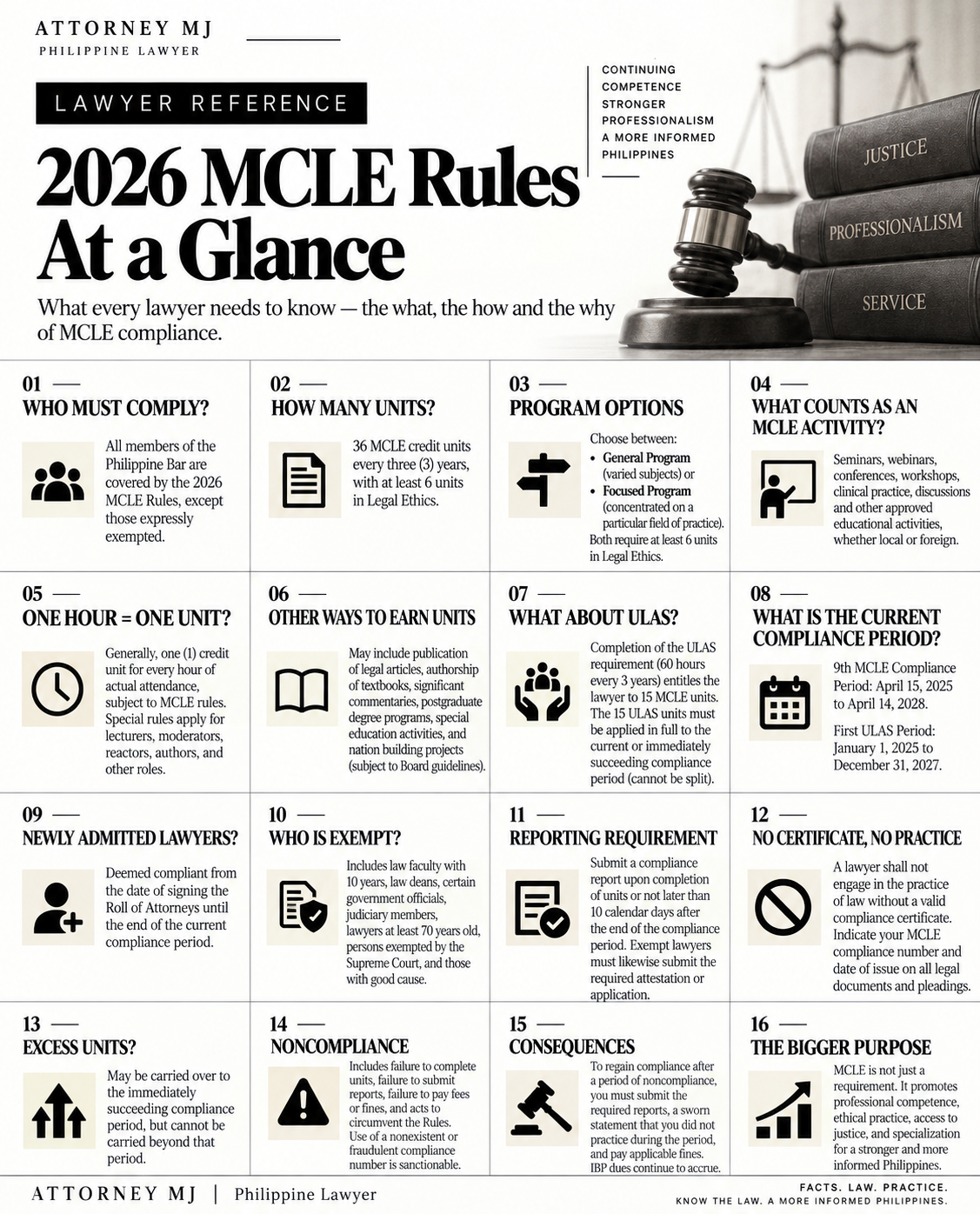
DEMYSTIFYING THE NEW 2026 RULES ON MANDATORY CONTINUING LEGAL EDUCATION
The 2026 Rules on Mandatory Continuing Legal Education introduce a more flexible and practice oriented framework for Philippine lawyers. While the core requirement remains 36 MCLE units every three years, including at least 6 units in Legal Ethics, lawyers may now choose between a General Program and a Focused Program. The Rules also recognize broader educational activities, provide for possible MCLE credit from ULAS, postgraduate studies, legal publications and other qualifying activities, and establish a framework for legal specialization. More importantly, compliance is directly tied to the authority to practice law, making proper completion, documentation, reporting, and maintenance of a valid MCLE compliance certificate essential for every practicing lawyer.
Read More
When Inaction Becomes Grave Abuse of Discretion: Can Mandamus Compel Congress to Pass the Anti-Political Dynasty Law?
The article examines whether the Supreme Court may compel Congress through mandamus to fulfill Article II, Section 26 of the 1987 Constitution, which directs the State to prohibit political dynasties “as may be defined by law.” Its central argument is that the Constitution imposes a mandatory duty on Congress to enact the necessary anti-political dynasty law, while Congress retains discretion over the law’s specific content, scope, and enforcement mechanisms. The article weighs this position against the separation of powers concern that legislation is inherently deliberative and discretionary, and therefore may not be a proper subject of mandamus. It ultimately frames the 2026 ruling as part of a broader constitutional question: whether prolonged governmental inaction can itself constitute grave abuse of discretion, while still preserving the Judiciary’s duty to enforce the Constitution without assuming Congress’ legislative function.
Read More