Preliminary Investigation Process in the Philippines: A Step-by-Step Guide
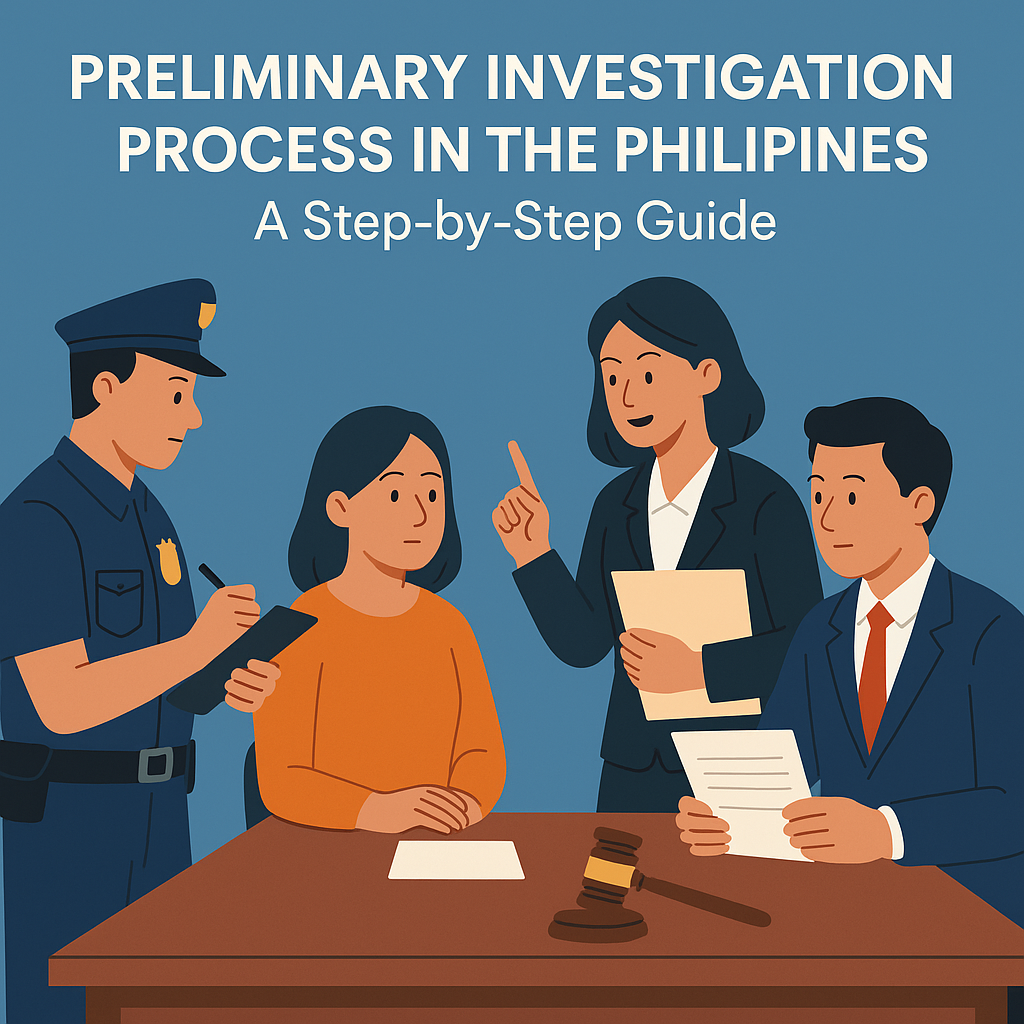
A preliminary investigation in the Philippines is a safeguard designed to ensure that only cases with sufficient basis move forward to trial. It is not itself a trial, but an inquiry into whether the complaint is supported by evidence strong enough to justify filing charges in court. Traditionally governed by Rule 112 of the Rules of Court, it has long been anchored on the constitutional right to due process under Article III, Section 14 of the 1987 Constitution.
Under the new DOJ Rules on Preliminary Investigation (Department Circular No. 015, effective July 31, 2024), the evidentiary threshold has shifted. Instead of merely determining probable cause—which required only a well-founded belief that a crime has been committed and the respondent is probably guilty—the standard now demands “reasonable certainty of conviction.” This means the complaint must be supported by prima facie evidence that, if left uncontested, would likely be sufficient to secure a conviction in court. The standard is more rigorous than probable cause, but still lower than the “moral certainty” required to convict at trial.
The process generally begins with the filing of a complaint-affidavit, supported by documents and witness statements. The prosecutor then issues a subpoena to the respondent, who is given ten days to submit a counter-affidavit and evidence. The complainant may reply, and the respondent may file a rejoinder, though these are not always mandatory. If needed, the prosecutor may call a clarificatory hearing. At the close of submissions, the prosecutor issues a resolution either directing the filing of an information in court or dismissing the complaint.
Parties may seek reconsideration of the resolution before the same office, or elevate the matter to the DOJ or, in some cases, to the Office of the President. What guides the prosecutor’s decision under the new rules is no longer the mere existence of probable cause, but whether the evidence presented provides a reasonable certainty that the case can be successfully prosecuted.
This stricter evidentiary bar protects the rights of respondents from weak or unfounded cases, while ensuring that only well-built complaints proceed to court. For complainants, this means presenting stronger documentary and testimonial evidence at the outset. For respondents, it underscores the importance of carefully preparing counter-affidavits and not ignoring subpoenas.
The preliminary investigation remains a cornerstone of the Philippine criminal justice system. But with the shift to “reasonable certainty of conviction,” it now carries an even greater responsibility for both prosecutors and parties to build or defend cases with thoroughness and credibility from the very beginning.
If you need assistance in drafting affidavits or preparing for a preliminary investigation, MJM Law & Partners is ready to provide expert legal support with clarity, strategy, and results.
Atty. Mark Joseph Morales, CPA, MBA, JD
Founder and Managing Partner, MJM Law & Partners
Full professional profileYou Might Also Like

“No Return, No Exchange”: When Can a Buyer Demand a Refund or Replacement?
A store policy cannot automatically defeat a consumer’s remedies for defective goods. This guide explains the distinction between a genuine defect and a change of mind, the repair and replacement framework under the Consumer Act, and the records and steps that help buyers pursue an appropriate remedy.
Read More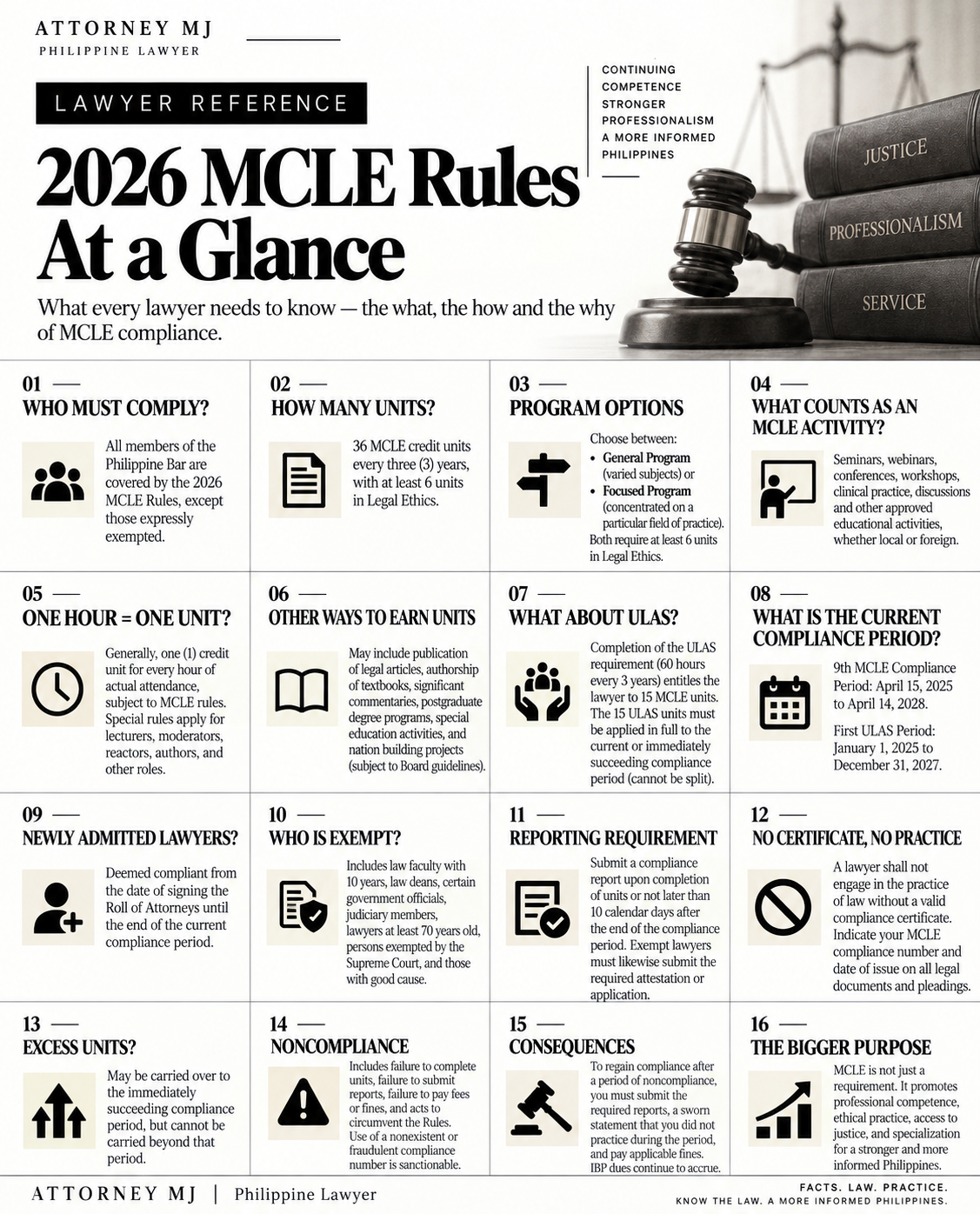
DEMYSTIFYING THE NEW 2026 RULES ON MANDATORY CONTINUING LEGAL EDUCATION
The 2026 Rules on Mandatory Continuing Legal Education introduce a more flexible and practice oriented framework for Philippine lawyers. While the core requirement remains 36 MCLE units every three years, including at least 6 units in Legal Ethics, lawyers may now choose between a General Program and a Focused Program. The Rules also recognize broader educational activities, provide for possible MCLE credit from ULAS, postgraduate studies, legal publications and other qualifying activities, and establish a framework for legal specialization. More importantly, compliance is directly tied to the authority to practice law, making proper completion, documentation, reporting, and maintenance of a valid MCLE compliance certificate essential for every practicing lawyer.
Read More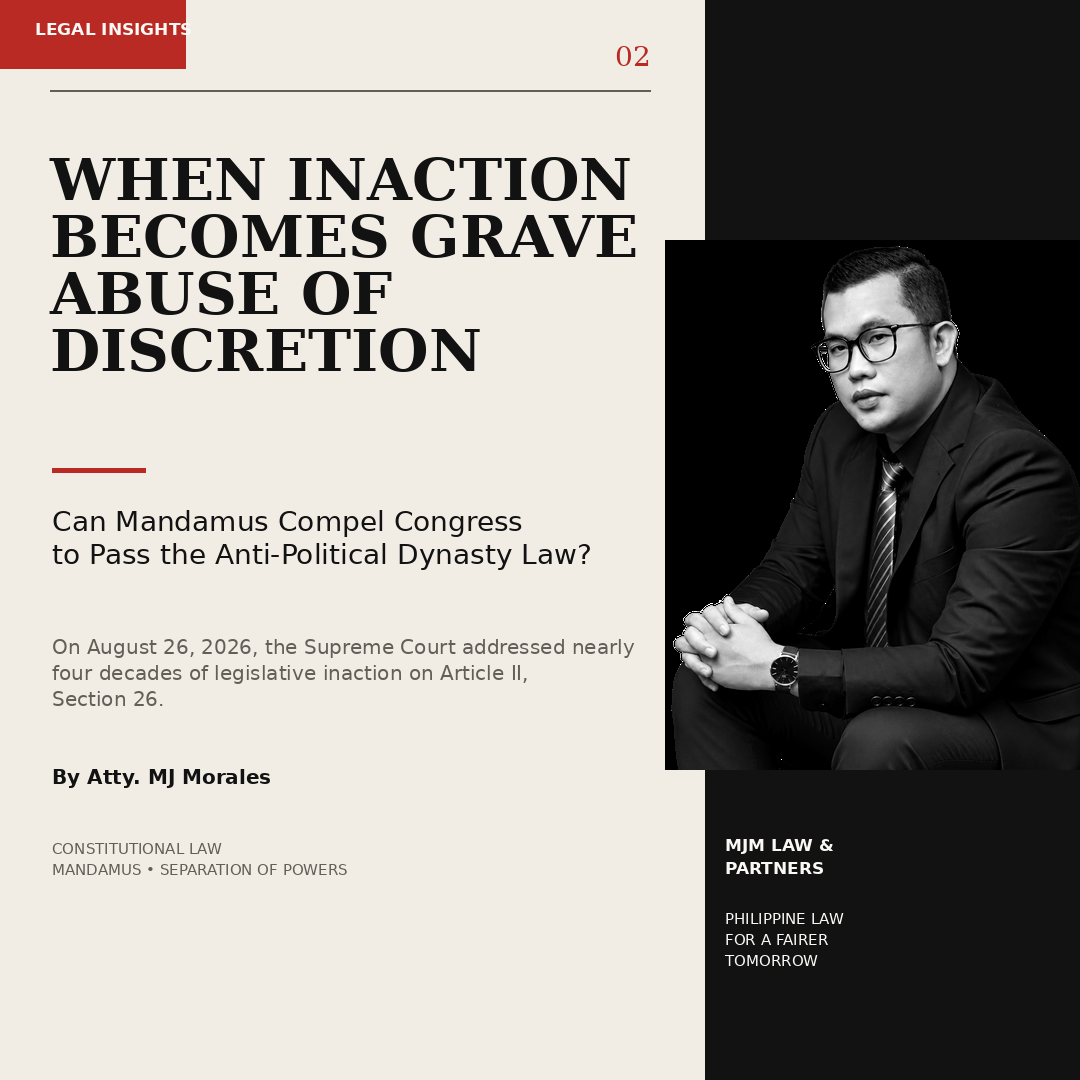
When Inaction Becomes Grave Abuse of Discretion: Can Mandamus Compel Congress to Pass the Anti-Political Dynasty Law?
The article examines whether the Supreme Court may compel Congress through mandamus to fulfill Article II, Section 26 of the 1987 Constitution, which directs the State to prohibit political dynasties “as may be defined by law.” Its central argument is that the Constitution imposes a mandatory duty on Congress to enact the necessary anti-political dynasty law, while Congress retains discretion over the law’s specific content, scope, and enforcement mechanisms. The article weighs this position against the separation of powers concern that legislation is inherently deliberative and discretionary, and therefore may not be a proper subject of mandamus. It ultimately frames the 2026 ruling as part of a broader constitutional question: whether prolonged governmental inaction can itself constitute grave abuse of discretion, while still preserving the Judiciary’s duty to enforce the Constitution without assuming Congress’ legislative function.
Read More