A Step‑by‑Step Guide to Filing a Criminal Complaint in the Philippines

Filing a criminal complaint in the Philippines is a crucial legal step in seeking justice when a crime has been committed. Whether you're a private citizen, legal advocate, or business owner, understanding this process helps ensure the proper invocation of legal remedies. Here's a clear step-by-step guide:
Step 1: Gather All Necessary Evidence
Before initiating any complaint, collect documentary and testimonial evidence. This may include:
- Affidavits of the complainant and witnesses
- Photos, videos, audio recordings
- Medical or police reports
- Contracts or relevant documents showing motive or injury
Tip: Evidence should be clear, admissible, and support each element of the crime charged.
Step 2: Draft the Sworn Complaint-Affidavit
This document is the core of your complaint. It must contain:
- The full name and details of the complainant
- The identity of the respondent(s) (if known)
- A narration of facts constituting the offense
- The specific law violated
- Supporting documents attached as annexes
Legal basis: Rule 112, Sec. 3 of the Rules of Court
Step 3: Attach Supporting Affidavits and Annexes
Each witness should execute their own Sworn Affidavit, notarized or subscribed before a public prosecutor. Attach evidence as annexes (labeled: Annex “A”, “B”, etc.).
Step 4: File the Complaint at the Proper Prosecutor’s Office
Determine the correct venue based on where the crime occurred. File the complaint either at:
- The City or Provincial Prosecutor’s Office
- The Office of the Ombudsman (for public officials)
Bring:
✔ Printed complaint-affidavit (3–5 copies)
✔ Valid ID
✔ USB copy (some offices require a soft copy)
✔ Filing fee (if applicable)
Step 5: Preliminary Investigation
After filing, the prosecutor may issue a Subpoena to the respondent(s), requiring them to file a Counter-Affidavit.
You may be asked to file a Reply Affidavit in response. No need to appear unless summoned for clarificatory hearing.
Step 6: Wait for the Resolution
The prosecutor will review the evidence and issue a Resolution either:
- Finding probable cause to file charges in court
- Dismissing the complaint due to lack of probable cause
If probable cause is found, an Information will be filed before the appropriate Trial Court.
Step 7: Enforcement and Follow-Through
Once the case is filed:
- You’ll receive a copy of the Information
- The accused will be summoned or arrested
- You may appear as a witness during trial
Stay in contact with the Public Prosecutor assigned to your case.
Final Tips:
Consult a lawyer. A legal expert can guide you on the viability of your complaint.
Be thorough. Incomplete affidavits or lack of evidence may result in dismissal.
Respect legal timelines. Most crimes have prescriptive periods (Art. 90–91, RPC).
If you need legal help preparing a complaint-affidavit, our office can assist. Reach out to MJM Law & Partners at www.mjmlawpartners.com for personalized guidance.
Atty. Mark Joseph Morales, CPA, MBA, JD
Founder and Managing Partner, MJM Law & Partners
Full professional profileYou Might Also Like

“No Return, No Exchange”: When Can a Buyer Demand a Refund or Replacement?
A store policy cannot automatically defeat a consumer’s remedies for defective goods. This guide explains the distinction between a genuine defect and a change of mind, the repair and replacement framework under the Consumer Act, and the records and steps that help buyers pursue an appropriate remedy.
Read More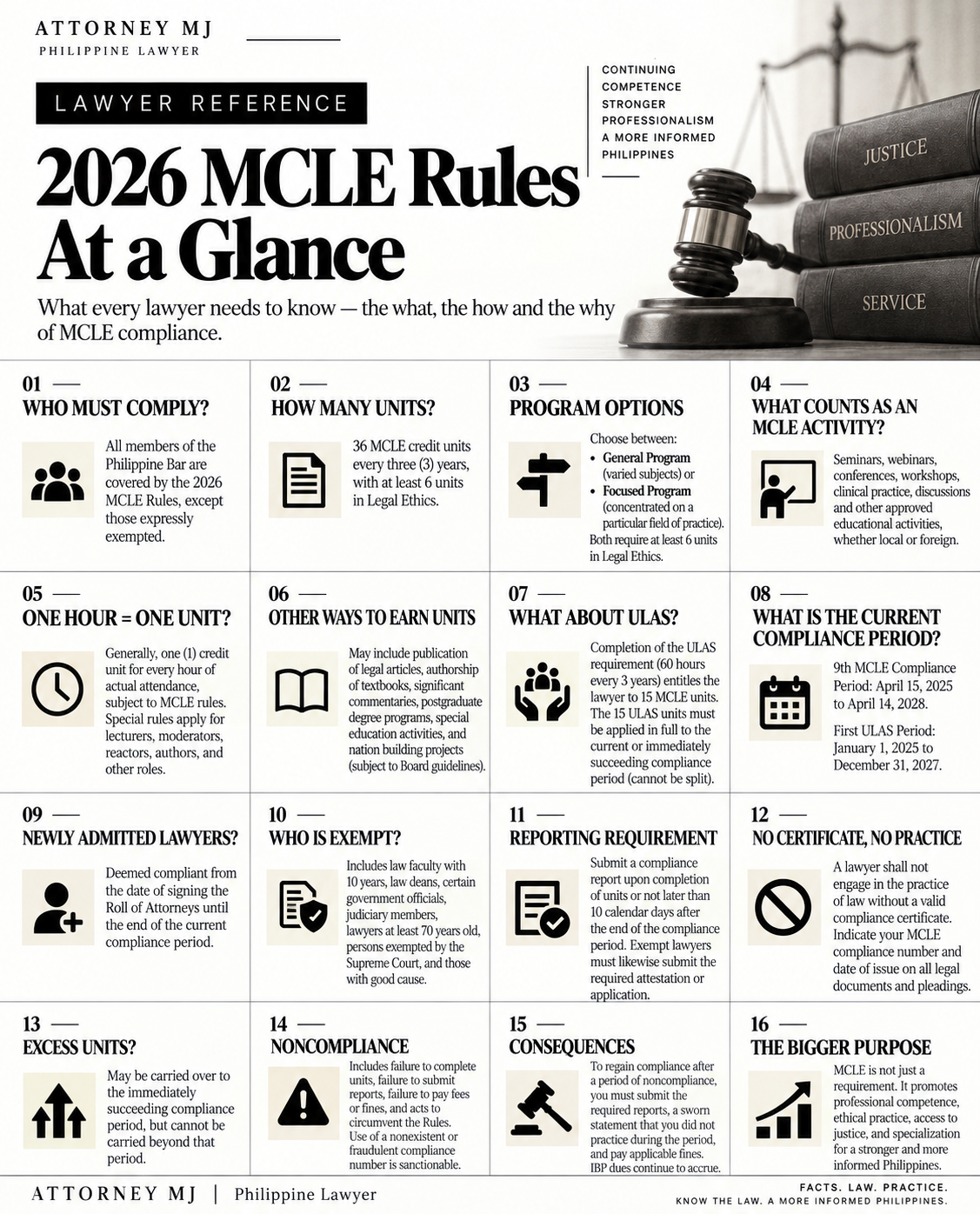
DEMYSTIFYING THE NEW 2026 RULES ON MANDATORY CONTINUING LEGAL EDUCATION
The 2026 Rules on Mandatory Continuing Legal Education introduce a more flexible and practice oriented framework for Philippine lawyers. While the core requirement remains 36 MCLE units every three years, including at least 6 units in Legal Ethics, lawyers may now choose between a General Program and a Focused Program. The Rules also recognize broader educational activities, provide for possible MCLE credit from ULAS, postgraduate studies, legal publications and other qualifying activities, and establish a framework for legal specialization. More importantly, compliance is directly tied to the authority to practice law, making proper completion, documentation, reporting, and maintenance of a valid MCLE compliance certificate essential for every practicing lawyer.
Read More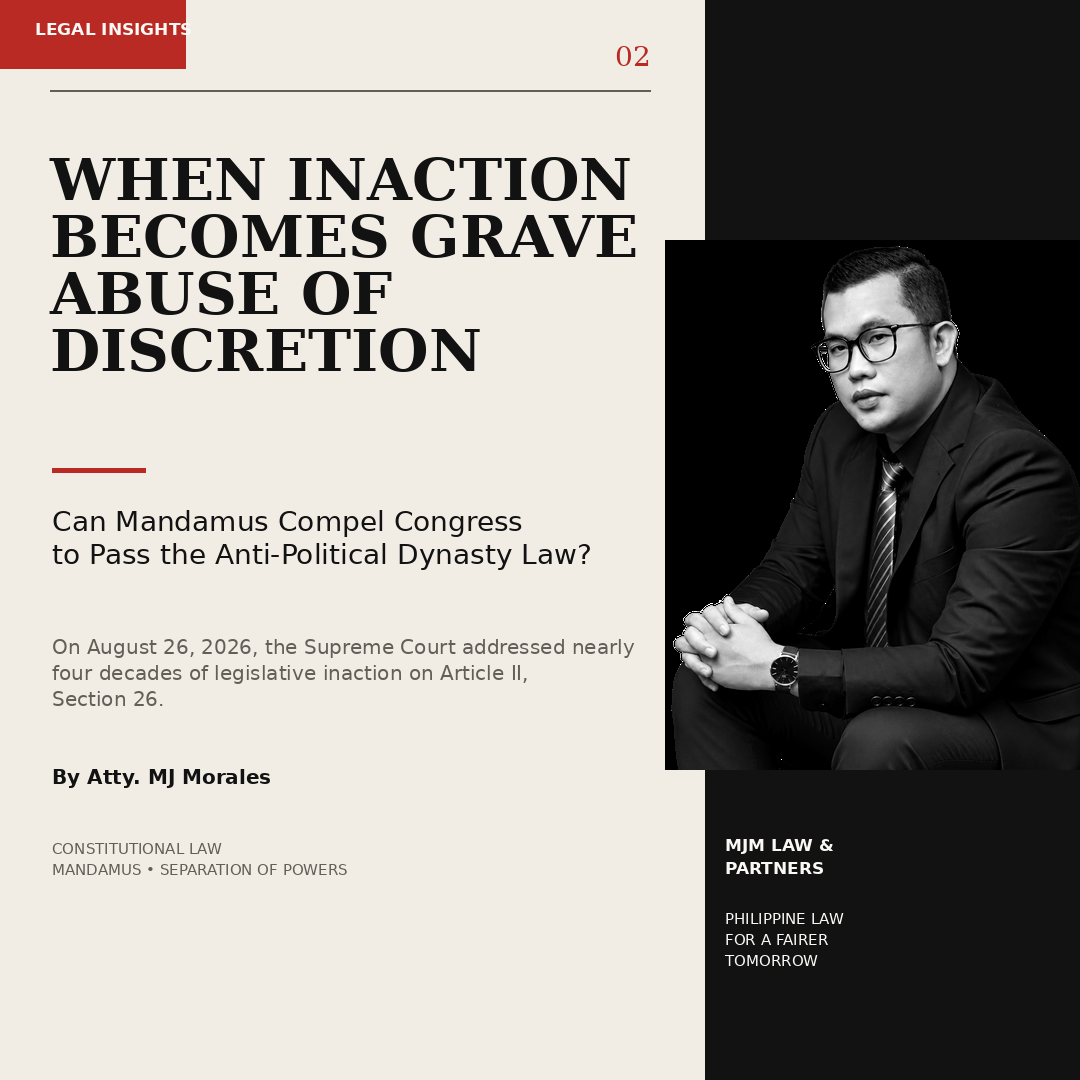
When Inaction Becomes Grave Abuse of Discretion: Can Mandamus Compel Congress to Pass the Anti-Political Dynasty Law?
The article examines whether the Supreme Court may compel Congress through mandamus to fulfill Article II, Section 26 of the 1987 Constitution, which directs the State to prohibit political dynasties “as may be defined by law.” Its central argument is that the Constitution imposes a mandatory duty on Congress to enact the necessary anti-political dynasty law, while Congress retains discretion over the law’s specific content, scope, and enforcement mechanisms. The article weighs this position against the separation of powers concern that legislation is inherently deliberative and discretionary, and therefore may not be a proper subject of mandamus. It ultimately frames the 2026 ruling as part of a broader constitutional question: whether prolonged governmental inaction can itself constitute grave abuse of discretion, while still preserving the Judiciary’s duty to enforce the Constitution without assuming Congress’ legislative function.
Read More