Who Really Owns the Company? Understanding Beneficial Ownership
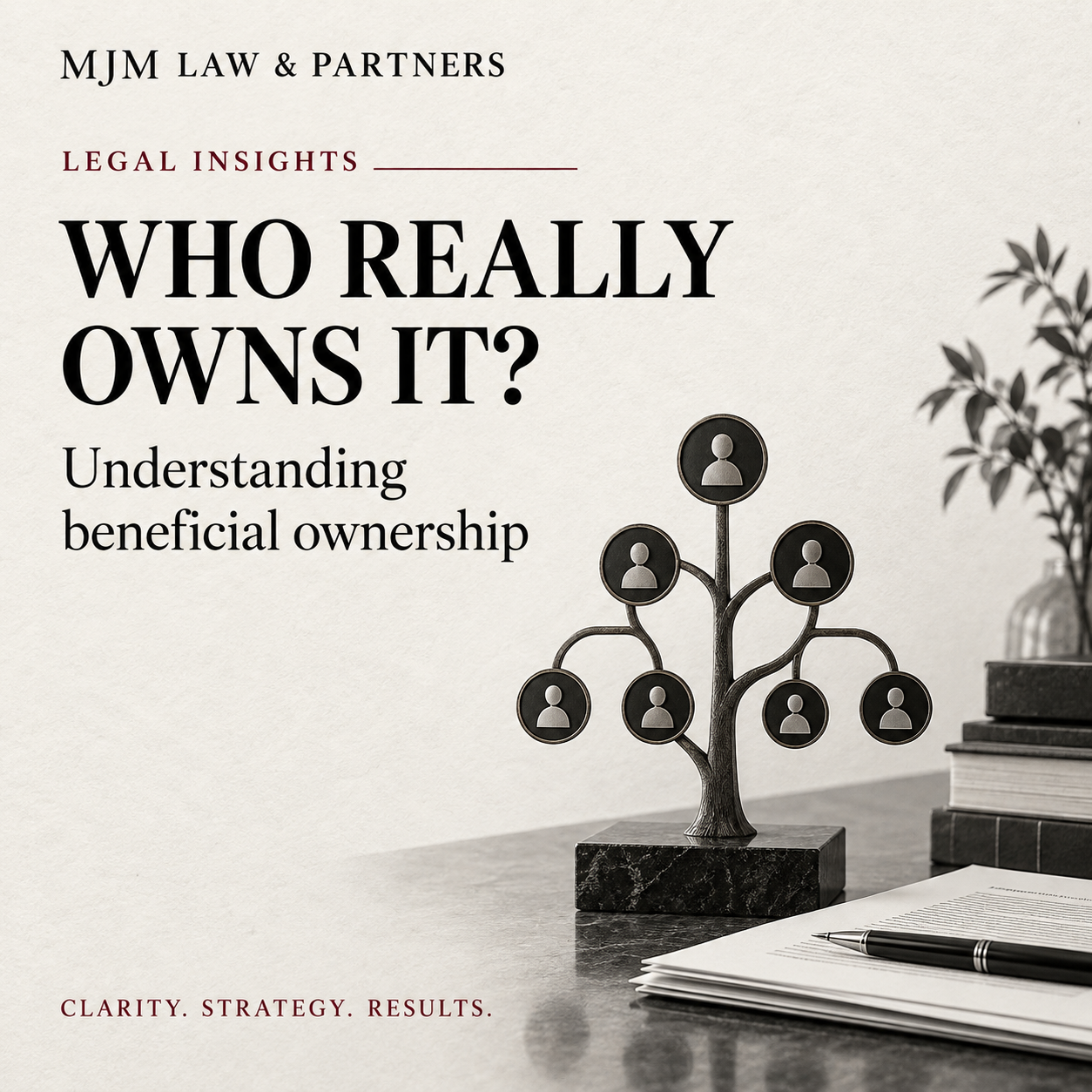
A company’s shareholder list names another corporation. That corporation belongs to a holding company, which is connected to several individuals. Looking only at the first name does not explain who ultimately owns or controls the structure.
Beneficial-ownership review looks beyond the immediate registered holder. It helps a company describe its ownership and control accurately and answer the questions required by the applicable regulatory regime.
I. Start with the current official requirements
The SEC has issued Revised Beneficial Ownership Disclosure Rules under Memorandum Circular No. 15, series of 2025. Its HARBOR platform collects and manages beneficial-ownership information. The platform’s privacy notice describes identifying the individual with significant ownership interest or control in a corporation as one of its purposes.
Requirements can involve definitions, categories, prescribed information, exceptions, filing procedures, and updating obligations. Review the current circular, forms, and official instructions for the entity concerned. Do not reuse an old filing template without checking whether the reporting process has changed.
II. Map the ownership chain
Begin with the company’s own records, then trace each relevant corporate holder through the available supporting documents. A working chart should identify entities and individuals, interests held, dates, and the records supporting each connection.
For example, if Company A holds an interest in Company B and an individual holds an interest in Company A, the registered shareholder of B may be A while the individual is relevant to the ultimate-ownership analysis. That example illustrates the need to trace the chain; it does not prescribe a universal threshold or decide who must be reported.
Control may raise questions beyond arithmetic ownership. Review voting arrangements, authority, and other rights relevant under the applicable rules. A chart that multiplies percentages without examining control may be incomplete.
III. Build an evidence file
- Company records: articles, share registers, relevant disclosures, and documented transfers.
- Intermediate holders: records identifying the ownership of each entity in the chain.
- Agreements: voting, nominee, or other arrangements relevant to ownership or control.
- Identity information: the prescribed records obtained and handled through an appropriate secure process.
- Dates and approvals: the effective date of the structure and the basis for the disclosure.
Do not assume a director, signatory, or person who submits the form is automatically the ultimate owner. Equally, do not treat a corporate shareholder as the end of the inquiry merely because it has separate legal personality.
IV. Resolve uncertainty before certifying
If records conflict or an overseas ownership layer is unclear, identify what is missing and request appropriate evidence. A convenient name should not be inserted solely to complete a mandatory field.
Have the responsible officers and advisers review the filing basis. Retain the submitted version and acknowledgment. A successful upload confirms submission, not necessarily the substantive accuracy of every declaration.
V. Keep the record current and confidential
Changes in ownership or relevant control arrangements should trigger a review of updating obligations. Assign responsibility so that a transaction does not remain disconnected from the disclosure process.
The information collected may include personal data. Limit access, use secure channels, and follow the applicable privacy and recordkeeping obligations. A beneficial-ownership compliance file is not an invitation to circulate identity documents unnecessarily.
VI. The practical takeaway
Trace the structure, support the conclusion, and check the current filing rules. Accurate ownership disclosure requires a coherent explanation of the people behind the company, not simply copying its first-level shareholder list.
Sources and further reading
- SEC Revised Beneficial Ownership Disclosure Rules, MC No. 15, series of 2025: https://www.sec.gov.ph/mc-2025/sec-mc-no-15-series-of-2025/
- SEC HARBOR privacy notice: https://harbor.sec.gov.ph/privacy-notice
This article provides general information on Philippine law. The appropriate advice and remedy depend on the facts, documents, and applicable rules.
For assistance reviewing your documents and legal options, contact MJM Law & Partners: https://www.mjmlawpartners.com/contact.
Clarity. Strategy. Results.
#CorporateLaw #BeneficialOwnership #SECCompliance #BusinessLaw #MJMLawPartners
Atty. Mark Joseph Morales, CPA, MBA, JD
Founder and Managing Partner, MJM Law & Partners
Full professional profileYou Might Also Like

Co-Owned Property: Can One Owner Sell, Occupy, or Partition It?
Sharing ownership is different from owning a specific physical portion. This guide explains undivided shares, limits on use and alterations, sale of a share, and the right to seek partition under the Civil Code.
Read More
CCTV and Privacy: Recording an Incident Is Not Permission to Publish It
CCTV can serve legitimate security purposes while also processing personal data. This guide explains why a business needs a defined purpose, safeguards, a retention policy, and a separate review before disclosing or posting footage.
Read More
13th-Month Pay in the Philippines: Coverage, Computation, and Common Questions
Prepare for 13th-month pay by checking legal coverage and the basic salary actually earned. This guide explains the general formula, partial-year service, and the records that help employees and employers verify the calculation.
Read More